
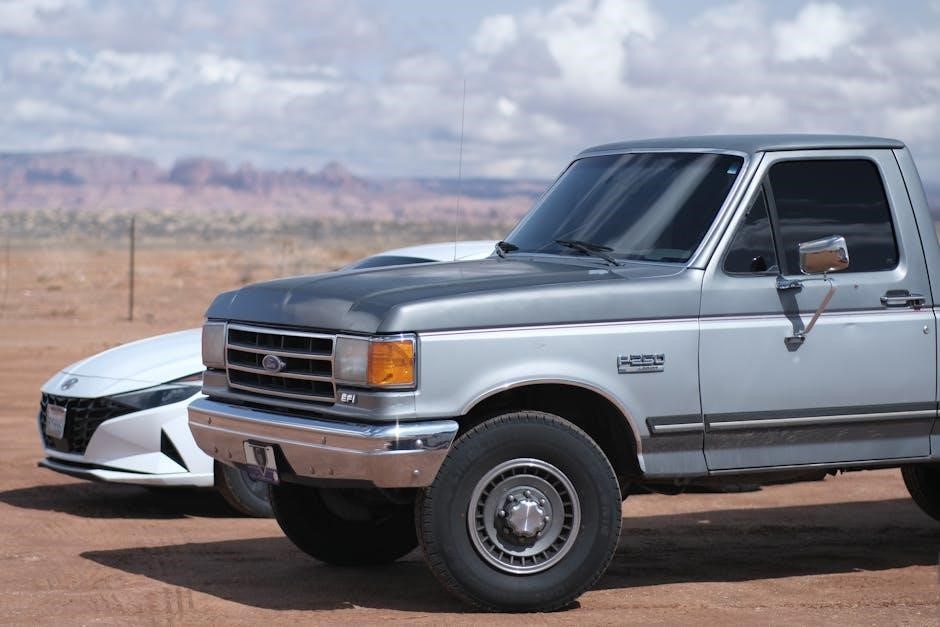
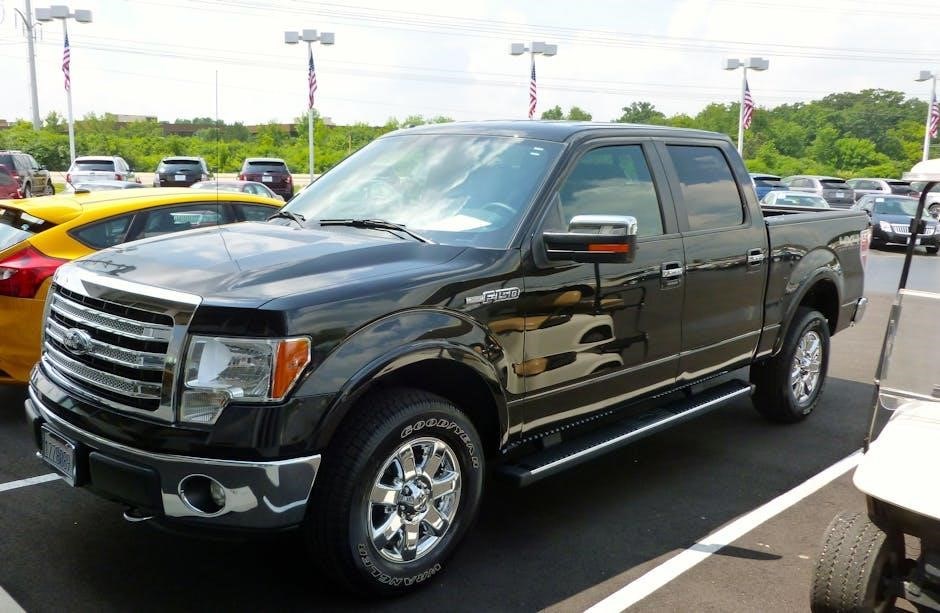
Welcome! This manual guides you through your 2013 F-150‚ offering detailed explanations for optimal use and a superior driving experience‚ ensuring satisfaction.
Vehicle Identification Number (VIN) & Key Information
Locating Your VIN: Your Vehicle Identification Number (VIN) is crucial for identifying your specific 2013 Ford F-150. It’s a 17-character alphanumeric code. You can find it on the driver’s side dashboard‚ visible through the windshield‚ and on your vehicle registration and insurance documents. The VIN provides detailed information about your truck’s manufacturing details‚ specifications‚ and history.
Key Information: Record your VIN‚ engine type‚ transmission type‚ and paint code in a safe place. This information is essential for warranty claims‚ service appointments‚ and potential resale. Your owner’s manual also contains important details about your vehicle’s features and capabilities. Keep it readily accessible within the glove compartment for quick reference during operation and maintenance.
Decoding the VIN: Certain portions of the VIN reveal specifics about the assembly plant‚ model year‚ and other critical attributes of your F-150.
Understanding Your Warranty
Your Ford F-150’s Warranty: Your 2013 Ford F-150 is protected by a comprehensive warranty package designed for peace of mind. This includes a basic bumper-to-bumper warranty‚ covering defects in materials and workmanship for a specified period. Additionally‚ a powertrain warranty safeguards the engine‚ transmission‚ and drive components for a longer duration.
Warranty Coverage Details: Carefully review your warranty booklet for specific coverage periods‚ exclusions‚ and deductible information. Regular scheduled maintenance‚ performed according to the recommended intervals‚ is crucial for maintaining warranty validity. Keep detailed records of all service visits.
Warranty Transfers: The warranty typically transfers to subsequent owners during the warranty period. Contact your local Ford dealership for complete warranty details and assistance with any claims.

Getting Started
Familiarize yourself! This section details essential vehicle controls‚ instrumentation‚ and features‚ preparing you for a safe and enjoyable driving experience.
Vehicle Controls & Instrumentation
Understanding the Cockpit: Your 2013 Ford F-150’s interior is designed for functionality and ease of use. The steering wheel houses controls for audio‚ cruise control‚ and phone functions. The instrument cluster provides vital information‚ including speed‚ engine RPM‚ fuel level‚ and coolant temperature. Familiarize yourself with the location and operation of all switches‚ knobs‚ and buttons.
Key Controls: The gear selector allows you to choose between Park‚ Reverse‚ Neutral‚ Drive‚ and Manual shift modes. The climate control system regulates temperature and airflow. Power windows and door locks are conveniently located on the driver’s and passenger’s doors. The windshield wipers and washers ensure clear visibility in all weather conditions. Take time to practice using these controls while parked to build confidence.
Information Displays: The F-150 features a multi-information display that can be customized to show various vehicle parameters. Learn how to navigate the menus and access the information that is most important to you. Understanding these controls will enhance your driving experience and ensure safe operation.
Dashboard Symbols & Warning Lights
Decoding the Signals: Your 2013 Ford F-150’s dashboard features a series of symbols and warning lights designed to alert you to various vehicle conditions. It’s crucial to understand what each indicator means to ensure safe operation. Green lights generally indicate normal function‚ while yellow lights signify a potential issue requiring attention. Red lights denote a serious problem demanding immediate action.
Common Indicators: The check engine light illuminates when the powertrain control module detects a malfunction. The ABS light indicates a problem with the anti-lock braking system. The low tire pressure light warns of insufficient tire inflation. The airbag light signals a potential issue with the airbag system.
Refer to the Manual: A comprehensive list of all dashboard symbols and their meanings can be found in the vehicle’s owner’s manual. Regularly check your dashboard for any illuminated warning lights and address them promptly to prevent potential damage or safety hazards. Ignoring these signals could lead to costly repairs.

Driving Your 2013 F-150
Experience the Road: This section details the operation of your F-150‚ covering starting‚ driving modes‚ towing‚ and payload for confident journeys.
Starting & Stopping the Engine
Starting Your F-150: Ensure the parking brake is engaged and the transmission is in Park (P) or Neutral (N). Insert the key into the ignition and turn it to the ‘Start’ position‚ holding it until the engine starts. Release the key immediately upon engine start. For vehicles equipped with Push-Button Start‚ firmly press the brake pedal and then press the Start/Stop button.
Engine Stopping Procedure: To stop the engine‚ shift the transmission into Park (P) and firmly press the brake pedal. Turn the ignition key to the ‘Off’ position or‚ for Push-Button Start systems‚ press the Start/Stop button. Allow the engine to fully stop before removing the key or exiting the vehicle. Avoid prolonged idling to conserve fuel and reduce emissions. Always ensure the vehicle is completely stopped before shifting into Park.
Important Note: Never start or stop the engine while the vehicle is in motion. Familiarize yourself with these procedures for safe and efficient operation.
Driving Modes & Performance Features
2013 F-150 Driving Modes: Your F-150 offers versatile driving experiences. Standard modes include 2WD for typical driving conditions and 4WD for enhanced traction on slippery surfaces. Select 4WD High for moderate off-road conditions and 4WD Low for demanding terrain requiring increased torque. Shift on the fly between 2WD and 4WD High at speeds under 50 mph.
Performance Features: The F-150 boasts a robust engine lineup‚ offering varying horsepower and torque outputs. Available features like Tow/Haul mode optimize transmission shift points for towing heavy loads. Electronic stability control and traction control systems enhance handling and prevent wheel spin. Consider the load and terrain when selecting the appropriate driving mode for optimal performance and safety.
Understanding Your Vehicle: Refer to the full owner’s manual for detailed specifications and limitations of each driving mode.
Towing & Payload Capacity
Understanding Limits: Your 2013 F-150’s towing and payload capacity vary significantly based on engine‚ axle ratio‚ cab configuration‚ and other options. Never exceed the Gross Vehicle Weight Rating (GVWR) or Gross Combined Weight Rating (GCWR). These ratings are found on the vehicle’s doorjamb sticker and in the owner’s manual.
Calculating Weight: Accurately determine the weight of your trailer and cargo. Improperly distributed weight can compromise handling and stability. Utilize a weight distribution hitch for heavier trailers. Regularly inspect tires for proper inflation‚ as towing significantly increases load.
Safety First: Always adhere to posted speed limits and allow for increased stopping distances when towing. Consult the owner’s manual for detailed towing guidelines and safety recommendations.

Maintenance & Care
Preserving Performance: Regular maintenance is crucial for your F-150’s longevity and reliability; follow the scheduled maintenance plan detailed within this comprehensive owner’s manual.
Scheduled Maintenance
Maintaining Peak Condition: Your 2013 Ford F-150 requires a consistent maintenance schedule to ensure optimal performance and longevity. This schedule‚ detailed in the service intervals section‚ outlines necessary inspections‚ fluid changes‚ and component replacements. Regular oil and filter changes are paramount‚ typically every 5‚000 to 7‚500 miles depending on driving conditions.
Coolant flushes should occur every 50‚000 miles‚ and transmission fluid changes are recommended around 60‚000 miles. Don’t neglect brake inspections – pads‚ rotors‚ and lines should be checked routinely. Tire rotations every 8‚000 miles promote even wear‚ extending tire life. Adhering to this schedule prevents costly repairs and keeps your F-150 running smoothly for years to come. Consult the full maintenance schedule within this manual for specific recommendations tailored to your vehicle’s usage.
Fluid Checks & Replacements (Oil‚ Coolant‚ etc.)
Essential Fluid Management: Regularly checking and maintaining your 2013 F-150’s fluids is crucial for reliable operation. Engine oil should be checked weekly‚ and replaced every 5‚000-7‚500 miles using the recommended SAE viscosity grade. Coolant levels should be inspected monthly‚ ensuring a 50/50 mix of antifreeze and distilled water.
Brake fluid should be checked periodically for contamination and replaced every two to three years. Power steering fluid levels are also important; low levels can cause steering difficulties. Transmission fluid should be inspected for color and odor‚ and changed according to the scheduled maintenance intervals. Windshield washer fluid should be topped off as needed. Proper fluid levels and timely replacements prevent damage and ensure optimal performance.
Tire Information & Maintenance
Optimal Tire Care: Maintaining proper tire pressure is vital for safety‚ fuel efficiency‚ and tire longevity on your 2013 F-150. Refer to the sticker on the driver’s side doorjamb for recommended PSI. Inspect tires monthly for wear‚ damage‚ and proper inflation. Rotate tires every 5‚000-7‚500 miles to ensure even wear.
Check tire tread depth regularly using a tread depth gauge; replace tires when they reach 2/32 of an inch; Ensure tires are properly balanced to prevent vibrations and uneven wear. When replacing tires‚ use the correct size and load rating specified in your owner’s manual. Regularly inspect sidewalls for bulges or cracks. Proper tire maintenance enhances handling and extends tire life.

Safety Features

Protecting You: Your 2013 F-150 is equipped with advanced safety systems like airbags and AdvanceTrac® with Roll Stability Control‚ prioritizing occupant well-being.
Airbag System
Understanding Your Airbags: Your 2013 Ford F-150 features an advanced airbag system designed to provide crucial protection during certain collision events. This system includes driver and front passenger airbags‚ as well as side-impact airbags mounted in the seats. Seat-mounted thorax airbags and a safety canopy system are also included for enhanced side protection.
How it Works: Airbags deploy rapidly when a significant impact is detected. Deployment is determined by the severity of the impact and sensor readings. It’s important to remember airbags are supplemental restraints and work best when used with safety belts. Always ensure all occupants are properly restrained.
Important Reminders: Never place rear-facing child seats in the front passenger seat if the airbag cannot be deactivated. Inspect airbags regularly for any signs of damage. Refer to the full owner’s manual for detailed information regarding airbag system operation and safety precautions.
AdvanceTrac® with Roll Stability Control (RSC)
Enhancing Vehicle Control: Your 2013 Ford F-150 is equipped with AdvanceTrac® with Roll Stability Control (RSC)‚ an electronic system designed to enhance stability and help prevent skids. It builds upon traditional traction control by actively managing braking and engine power to maintain directional control.

How it Functions: RSC monitors the vehicle’s roll angle and rate. If a rollover risk is detected‚ it applies brakes individually to specific wheels‚ helping to steer the vehicle back onto its intended path. AdvanceTrac® intervenes during loss of traction‚ reducing engine power and applying brakes to regain control.

System Operation & Limitations: While incredibly effective‚ AdvanceTrac® and RSC are not substitutes for safe driving practices. Always maintain a safe speed and be aware of road conditions. The system may activate even with careful driving in challenging situations. Refer to the owner’s manual for complete details.
Troubleshooting & Emergency Assistance
Preparedness is Key: This section details procedures for jump-starting‚ emergency situations‚ and common issues‚ ensuring you’re equipped to handle unexpected events safely.
Jump Starting Procedures
Caution: Jump starting can be hazardous. Follow these steps carefully to avoid injury or damage to your vehicle’s electrical system. Ensure both vehicles are turned off and not touching each other.
Step 1: Connect the red (positive) cable to the positive terminal of the discharged battery. Then‚ connect the other red clamp to the positive terminal of the good battery.
Step 2: Connect the black (negative) cable to the negative terminal of the good battery. Important: Do not connect the black clamp directly to the negative terminal of the discharged battery. Instead‚ connect it to a solid‚ unpainted metal surface on the engine block‚ away from the battery.
Step 3: Start the vehicle with the good battery and let it run for a few minutes. Then‚ attempt to start the vehicle with the discharged battery. If it doesn’t start immediately‚ let the good vehicle run for a few more minutes before trying again.

Step 4: Once started‚ carefully disconnect the cables in the reverse order of connection. Allow your F-150 to run for at least 20-30 minutes to recharge the battery. If the battery continues to discharge‚ have it inspected by a qualified technician.
What to Do in an Emergency
Stay Calm: In any emergency‚ remaining calm is crucial for clear thinking and effective action. Prioritize your safety and the safety of any passengers.
Roadside Assistance: Your 2013 F-150 may be covered by a roadside assistance program. Consult your warranty information or owner’s manual for contact details. They can provide services like towing‚ jump starts‚ and tire changes.
Hazard Lights: Immediately activate your hazard lights to alert other drivers to your situation. If possible‚ safely move your vehicle to the side of the road‚ away from traffic.
Call for Help: If the situation requires it‚ call emergency services (911 in the US). Provide your location and a clear description of the emergency.
Accident Procedures: In the event of an accident‚ exchange information with other involved parties‚ including insurance details and contact information. Document the scene with photos if safe to do so.